
MARKET-ENTRY CASE STUDY
Iron Ore Market Entry Turkey: 1 Conditional Route Identified
Hana Solution LLC assessed four potential buyer structures in Turkey for a US-based iron ore supplier before commercial outreach began. One structure was excluded because active demand was not confirmed, two operated within a consolidated procurement group, and one conditional entry route was retained for further validation. No buyer contact was initiated during the reported assessment.
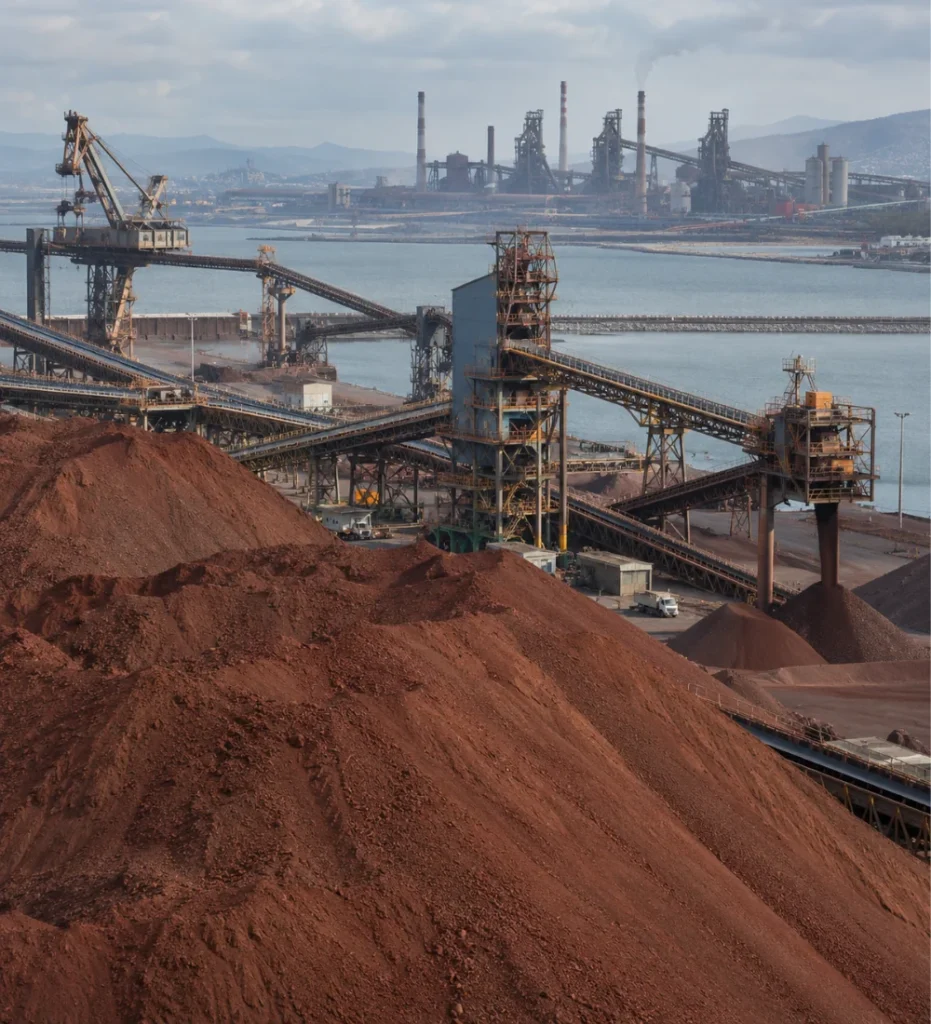
A Large Steel Market Did Not Automatically Mean an Open Iron Ore Sales Market
A US-based iron ore supplier was considering Turkey as a potential market. Before any commercial outreach, Hana Solution LLC assessed where direct ore demand appeared to sit, whether apparently separate targets represented independent procurement decisions and which route—if any—justified further validation.
National steel output suggested a broad buyer universe
Import volume, steel capacity and the number of visible producers could be read as evidence of multiple addressable accounts. That top-down view did not yet distinguish production route, active ore demand or procurement control.
The addressable structure was narrower than the headline market
Electric-arc-furnace output was not treated as equivalent to continuous iron ore demand. After the demand and ownership filters were applied, two active-demand entities were treated as one consolidated procurement group and one independent structure remained conditional.
What Was Tested Before Commercial Outreach in Turkey
The assignment converted a country-level opportunity into a buyer-structure decision. It was a pre-engagement market-entry assessment—not a promise of introduction, representation or demand.
Production Route
Integrated and electric-furnace production were separated so total steel output was not used as a direct proxy for iron ore demand.
Active Demand
Visible producers were reviewed for evidence relevant to current ore-consuming operations within the information available at the time.
Ownership Structure
Separate operating companies were checked for group relationships that could affect whether purchasing decisions were independent.
Procurement Control
Publicly visible procurement arrangements were reviewed to distinguish plant-level activity from group-led sourcing.
Supplier Fit
The client’s product and entry objective were considered against the remaining structure; technical and commercial qualification still required buyer-side confirmation.
Contact Gate
Commercial outreach was held until the structural question had been answered and the client could decide whether deeper validation was justified.
How Four Apparent Buyer Structures Became One Conditional Entry Route
Each phase reduced a different source of false opportunity: headline market size, non-equivalent production routes, duplicate decision centres and unverified access assumptions.
- Phase 1
Market Baseline
Trade quantity, steel output and production-route data were used to frame the market without treating national totals as the sales pipeline.
- Phase 2
Demand Filter
Four candidate structures were reviewed; one was excluded because active demand was not confirmed within the assessment scope.
- Phase 3
Control Mapping
Three active-demand entities remained. Two were treated as part of one consolidated procurement group rather than as independent entry routes.
- Phase 4
Entry Decision
One independent structure was retained conditionally for deeper product-fit, qualification and access validation before contact.
The Evidence Chain Behind the Market-Entry Decision
The table separates observed structure from commercial inference. Identifying and commercially sensitive details are withheld.
| Assessment Area | Starting View | Finding | Decision Status |
|---|---|---|---|
| Import scale | Turkey appeared to be a large national import market. | UN Comtrade’s 2024 aggregate record for HS 2601 reports an estimated net quantity of 10.006 million tonnes. This framed scale, not addressable demand for this supplier. | Context Only |
| Production route | Total steel output appeared to imply broad ore demand. | The high electric-furnace share meant steel output could not be translated directly into continuous iron ore demand. | Filtered |
| Candidate set | Four visible structures appeared potentially relevant. | One was excluded because active demand was not confirmed within the agreed review. | 1 Excluded |
| Decision centres | Three active-demand entities could appear to represent three sales routes. | Two operated within a common group procurement structure and were not counted as independent routes. | Consolidated |
| Independent route | One structure appeared independent of the consolidated group. | It was retained for further validation; product fit, supplier onboarding, access and current buying interest were not yet confirmed. | Conditional |
| Commercial outreach | Buyer contact could have started from the initial list. | No contact was initiated before the structural assessment was completed. | 0 Contacts |
The Client Received a Narrower, Evidence-Led Entry Decision Before Spending Sales Time
What changed for the client
- Headline trade and steel data were separated from the addressable buyer structure.
- Non-equivalent production routes were not counted as the same demand opportunity.
- Affiliated operating companies were not mistaken for separate procurement decisions.
- One potential route remained visible without overstating access or buyer interest.
- The client could decide whether deeper validation justified the next commercial step.
What Current Public Sources Show About Iron Ore Market Entry in Turkey
These primary sources explain why production route, ownership and purchasing control matter. They provide current context and do not prove the confidential findings of the engagement.
Steel output and production route
World Steel Association reports 38.1 million tonnes of Turkish crude steel production in 2025, with 72.2% produced through electric furnaces and 27.8% through the oxygen route. That mix is why national steel output should not be treated as a direct measure of addressable iron ore demand.
World Steel in Figures 2026 →2024 iron ore trade quantity
UN Comtrade’s 2024 Turkey import record for HS 2601 reports 10,006,166,948 kg net weight and marks the quantity as estimated. The case therefore uses 10.01 Mt as a trade-data baseline, not as proof of demand available to a particular supplier.
UN Comtrade — Trade Data →Group-led procurement
Erdemir states that procurement strategies for OYAK Mining Metallurgy Group companies are developed centrally and that common procurement is led by the Procurement Group Vice Presidency. Public company structure also identifies İsdemir within the group. This illustrates why separate plants may not equal separate entry decisions.
Erdemir — Supplier Relations →Supplier application is a defined process
Erdemir provides an e-procurement platform and a new-supplier application route. A potential buyer’s public onboarding channel does not confirm active demand or qualification, but it shows why supplier access should be treated as a process rather than an assumed introduction.
Erdemir — Supplier Portal and Applications →Cross-checking official trade data
Türkiye’s official foreign-trade statistics portal provides a second route for checking commodity imports by classification and period. Classification, unit, revisions and estimation flags should be recorded whenever a national total is used in a commercial market assessment.
TurkStat — Foreign Trade Statistics →Related market analysis
For a broader informational view of production routes, demand concentration and what foreign suppliers should validate before entry, see Hana Solution LLC’s current Turkey iron ore market analysis.
Turkey Iron Ore Market Analysis →Questions Foreign Iron Ore Suppliers Ask Before Entering the Turkish Market
How large is Turkey’s iron ore import market?
UN Comtrade’s aggregate 2024 record for HS 2601 reports an estimated net import quantity of approximately 10.01 million tonnes. That country total does not show how much demand is commercially accessible to a specific supplier, product or origin.
Who buys iron ore in Turkey?
The relevant universe is narrower than the complete list of steel producers. Ore-consuming integrated operations, ownership links, group procurement and current operational demand must be distinguished before naming realistic targets.
Why does Turkey’s electric-furnace share matter?
Electric-arc-furnace production is generally scrap-based, while integrated blast-furnace routes require iron-bearing raw materials. Production route therefore materially changes whether a steel producer represents continuous iron ore demand.
Are separate steel plants separate sales opportunities?
Not necessarily. Plants may belong to the same corporate group or operate under common purchasing control. Ownership and buying authority should be mapped before counting decision centres or approaching multiple entities.
Does Hana Solution LLC guarantee a buyer introduction?
No. Hana Solution LLC is a buyer-side sourcing consultancy and accepts selected supplier market-entry assessments as separate, independent fixed-fee assignments. It does not act as a commodity seller, broker or commission-based sales agent, and it does not guarantee access, buyer interest, supplier approval, a tender, contract or sale.
What is needed to scope an iron ore market-entry assessment?
Share the product form and grade, key chemical and physical specifications, origin, typical parcel size, annual availability, preferred delivery basis and ports, target timing, certifications, existing references and the commercial decision the assessment must support.
Use Market Structure to Decide Where Commercial Outreach Is Worthwhile
When this assessment may fit
- You supply iron ore or another industrial raw material and are evaluating Turkey.
- A market-size statistic exists, but the addressable buyer and decision structure are unclear.
- Potential targets may be connected through group ownership or central procurement.
- You want an evidence-led go, conditional-go or stop decision before sales outreach.
Scope boundaries remain explicit
Hana Solution LLC is not the client’s sales agent, commodity broker or distributor and does not guarantee introductions or transactions. Laboratory testing, legal or tax advice, customs representation, sanctions clearance, financing and contract negotiation require separate scopes or qualified specialists.
Considering the Turkish Market for Iron Ore or Industrial Raw Materials?
Send the product, specification, origin, available quantity, preferred delivery basis, target timing and what you need to decide. If you already have a target list, include it so ownership, procurement structure and commercial relevance can be tested before outreach.
Hana Solution LLC will confirm the proposed scope, deliverables, fixed fee and timeline in writing. No buyer contact or paid work begins without your approval.
This case study is based on a real advisory engagement. Client, company and commercially sensitive identifying details are withheld. Findings reflect the information reviewed and the decision stage reached during the engagement; they do not guarantee current demand, market access, buyer interest, supplier qualification, contract award or sales performance. External references provide general current context and are not legal, customs, sanctions, tax or investment advice. Case published June 2026 · last reviewed October 2026.