
MARKET-ENTRY CASE STUDY
Steel Scrap Market Entry Turkey: 4 Priority Routes Defined
Hana Solution LLC assessed nine potential buyer and market-access structures in Turkey for an international steel scrap supplier before commercial outreach began. The ferrous scrap review retained four priority routes, classified three structures as conditional and deprioritized two after demand, procurement control and trader dependency were assessed. No commercial contact was initiated during the reported engagement.
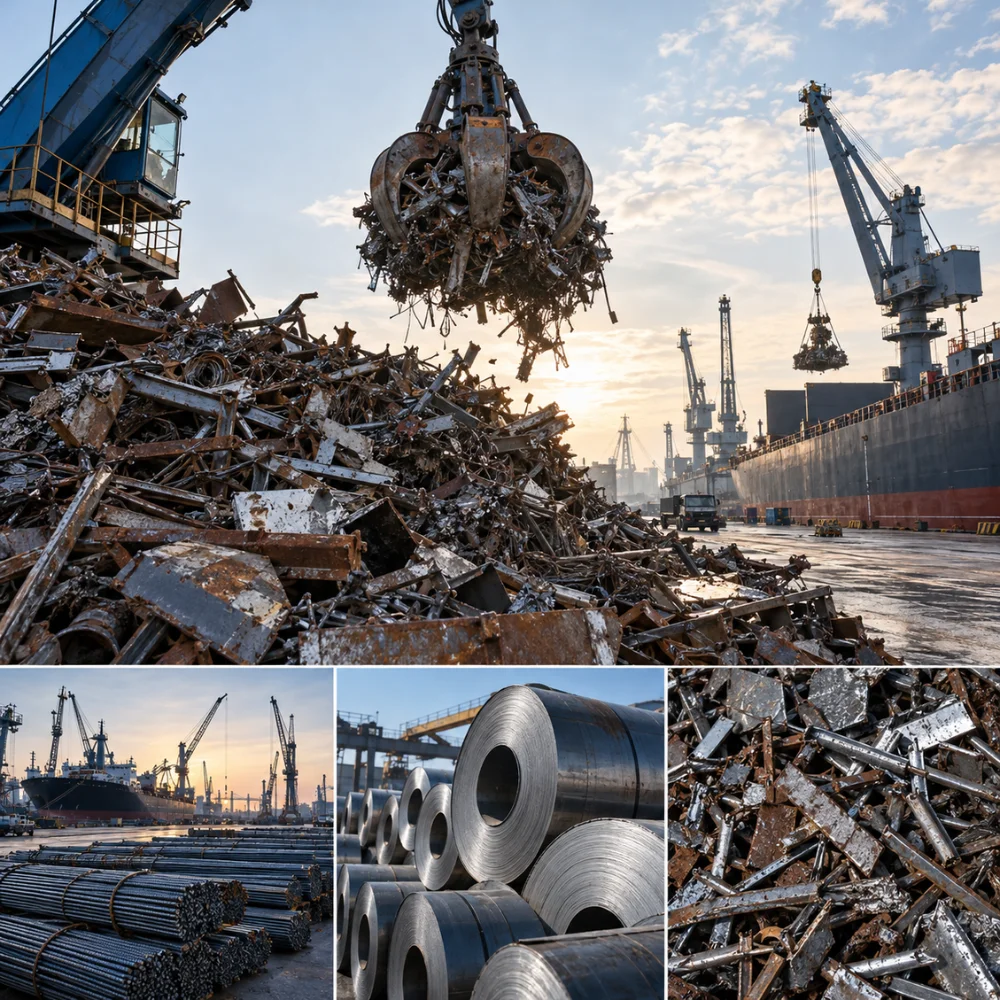
A Large Steel Scrap Import Market Did Not Mean Every Visible Mill Was Directly Accessible
An international steel scrap supplier was assessing entry into Turkey’s ferrous scrap market. Before commercial outreach, Hana Solution LLC reviewed nine potential buyer and access structures to determine where current demand, procurement control and channel conditions justified further engagement.
Import scale appeared to indicate a broad direct-buyer market
Turkey’s steel output, electric-furnace share and ferrous scrap imports suggested substantial demand. Visible mills and operating entities could therefore appear to represent separate, directly approachable accounts.
Demand visibility and commercial access were separate questions
The reviewed structures did not present one uniform route to market. Procurement control, group relationships, trader participation and readiness for direct engagement differed, requiring the targets to be classified before contact.
What Was Assessed Before Steel Scrap Commercial Outreach in Turkey
The assignment tested market structure and entry logic. It did not constitute buyer qualification, regulatory clearance, product acceptance, credit approval, price agreement or a guarantee of direct access.
Demand Relevance
Potential structures were screened for evidence of relevant ferrous scrap demand within the agreed assessment scope.
Buyer Structure
Operating entities, group relationships and apparently separate plants were reviewed so they were not automatically counted as independent opportunities.
Procurement Control
The assessment considered whether initial buying influence appeared to sit with a mill, corporate group, trader or another channel participant.
Channel Dependency
Direct and trader-mediated routes were distinguished without assuming that a visible intermediary had authority for a defined buyer or cargo.
Supplier Fit
Product form, grade, origin, available volume and delivery proposition were treated as later route-specific validation points—not inferred from market size.
Contact Sequence
The client received a priority, conditional or deprioritized position for each structure before deciding whether and how outreach should begin.
How Nine Steel Scrap Buyer and Access Structures Were Classified
The review moved from market size to commercial access. Each phase narrowed a different uncertainty while keeping buyer interest and supplier acceptance explicitly unconfirmed.
- Phase 1
Market and Demand Structure
The apparent buyer universe was organized by production relevance, demand logic and visible import structure.
- Phase 2
Procurement and Access
Direct, group-controlled and trader-mediated possibilities were distinguished for the structures reviewed.
- Phase 3
Decision and Control Layer
The likely first decision layer and gatekeeping conditions were mapped without disclosing counterparties publicly.
- Phase 4
Route Classification
Each structure was placed in a priority, conditional or deprioritized group with next-stage requirements recorded.
Buyer-Structure Map
Nine reviewed structures were documented with their visible role, demand relevance and relationship to the wider procurement architecture.
Access-Model Assessment
Direct, trader-mediated and group-controlled possibilities were separated rather than presented as one generic list of buyers.
Route Classification
Four priority, three conditional and two deprioritized structures were recorded together with the basis for each position.
Next-Stage Requirements
Product fit, channel alignment, contact sequence and other matters requiring confirmation before outreach remained visible.
What the Steel Scrap Market-Entry Review Established—and What It Did Not
The assessment produced a decision framework, not a public buyer list. The table separates the findings used for route classification from matters that still required commercial or transaction-specific confirmation.
| Assessment Area | Starting Position | Finding | Decision Status |
|---|---|---|---|
| Structure universe | Visible mills and market participants appeared to form a broad set of potential entry points. | Nine buyer and access structures were retained for comparison within the agreed scope. | 9 Reviewed |
| Priority routes | Direct commercial contact could have begun from the initial list. | Four structures justified priority follow-up after demand, control and access conditions were assessed. | 4 Priority |
| Conditional structures | Visibility could be mistaken for present commercial readiness. | Three structures required further alignment or confirmation before an outreach sequence could be recommended. | 3 Conditional |
| Deprioritized structures | Every relevant structure could appear worth pursuing immediately. | Two were not retained for current outreach; their activation conditions were documented for later review. | 2 Deprioritized |
| Channel model | Mill visibility could imply that direct contact was the default route. | Trader participation and other gatekeeping conditions materially affected several structures reviewed. | Route-Specific |
| Commercial contact | Contact activity could have preceded structural validation. | No buyer, trader or other counterparty was contacted during the reported assessment. | 0 Contacts |
The Client Received Four Priority Routes Without Treating Them as Confirmed Buyer Access
What changed for the client
- A national import figure was no longer treated as the accessible sales pipeline.
- Potential mills, group structures and channel participants were not counted as equivalent entry points.
- Four routes were prioritized without claiming confirmed interest or approval.
- Conditional and deprioritized structures remained documented rather than disappearing from the decision record.
- Commercial outreach was held until the client could review the access model and next-stage requirements.
Why Turkey’s Ferrous Scrap Import Scale Still Requires Route-Specific Validation
The following primary sources provide current market and regulatory context. They do not prove the confidential case findings or replace current product, customs, environmental, contractual, sanctions or credit checks.
18.7 million tonnes of ferrous scrap imports
World Steel Association reports Türkiye’s ferrous scrap imports at 18.7 million tonnes in 2025, compared with 20.0 million tonnes in 2024. The scale confirms a major import market but does not identify demand available to a particular supplier.
World Steel in Figures 2026 →EAF-led steel production
The same source reports 38.1 million tonnes of Turkish crude steel production in 2025, with 72.2% produced through electric furnaces. This explains the structural relevance of scrap, while grade, melt mix and buying requirements remain mill- and period-specific.
World Steel Association data →Metal scrap imports are controlled
Türkiye’s Ministry of Environment lists the 2026/23 Communiqué governing import inspection of metal scrap controlled for environmental protection. A market-entry route therefore requires more than identifying a visible mill or intermediary.
Ministry — 2026 metal scrap communiqué →Importer status is a separate check
The Ministry publishes information on metal-scrap import procedures and firms holding a Metal Scrap Importer Certificate. Import eligibility, current certificate scope and the commercial buying decision should be checked separately.
Ministry — Import/export permits and documents →HS classification drives import requirements
The Ministry of Trade advises importers to establish the customs tariff classification and check applicable permits, restrictions, specialised customs procedures and required documents before import. Ferrous waste and scrap falls under HS heading 7204, but “steel scrap” alone is not a sufficient transaction specification.
Ministry of Trade — Import regime FAQ →Related raw-material market-entry case
Turkey’s iron ore buyer structure follows a different production and procurement logic. Comparing the two cases shows why “steel raw materials” should not be treated as one undifferentiated buyer market.
Iron Ore Market Entry Turkey →Questions Steel Scrap Suppliers Ask Before Approaching Buyers in Turkey
How large is Turkey’s steel scrap import market?
World Steel Association reports 18.7 million tonnes of ferrous scrap imports in 2025. That country total demonstrates scale, but it does not show which mills or channels are currently accessible to a particular supplier, origin, grade or cargo profile.
Who buys imported steel scrap in Turkey?
Potential demand may sit with electric-furnace steelmakers, group procurement structures and authorised import arrangements, while traders or other channel participants may also influence access. A list of visible mills is not automatically a list of independent, directly approachable buyers.
Can a foreign steel scrap supplier contact Turkish mills directly?
Direct contact may be appropriate for some structures and ineffective or premature for others. The answer depends on current demand, procurement control, approved channels, supplier fit, grade, origin, cargo size, delivery basis and the buyer’s onboarding requirements.
What information is needed for a steel scrap market-entry assessment?
Share the scrap grades and specifications, origin, available monthly or annual volume, typical cargo size, loading port, preferred delivery basis, inspection and radiation-control documents, certifications, trading history and target timing.
Do four priority routes mean four confirmed buyers?
No. They were structures retained for controlled follow-up after the market-entry review. Buyer interest, product acceptance, onboarding, credit, price, contract terms and regulatory eligibility remained subject to later confirmation.
Does Hana Solution LLC broker or trade steel scrap?
No. Hana Solution LLC is a buyer-side sourcing consultancy and accepts selected supplier market-entry assessments as separate, independent fixed-fee assignments. It does not trade the material, take commissions from either side or guarantee buyer introductions or transactions.
Use a Steel Scrap Market-Entry Assessment Before Committing Commercial Outreach
When this assessment may fit
- You supply ferrous scrap and are evaluating Turkey as a destination market.
- Import statistics are attractive, but the real buyer and channel structure are unclear.
- You need to distinguish mill, group and trader-mediated routes before contact.
- You want a documented priority, conditional or stop decision before allocating sales resources.
Separate specialist checks remain necessary
Environmental and customs compliance, importer eligibility, waste classification, laboratory or radiation testing, inspection, sanctions, credit, cargo quality, logistics, insurance and contract advice are separate scopes. Qualified specialists may be required before any transaction proceeds.
Considering the Turkish Market for Steel Scrap?
Send the grades and specifications, origin, available volume, typical cargo size, loading port, preferred delivery basis, target timing and what you need to decide. If you already have a buyer or intermediary list, include it so the structures can be assessed before outreach.
Hana Solution LLC will confirm the proposed assessment scope, deliverables, fixed fee and timeline in writing. No buyer or intermediary contact and no paid work begin without your approval.
This case study is based on a real advisory engagement. Client, buyer, trader and commercially sensitive identifying details are withheld. Findings reflect the information reviewed and the decision stage reached during the engagement; they do not guarantee current demand, market access, regulatory eligibility, buyer interest, supplier approval, contract award or sales performance. External references provide general current context and are not legal, customs, environmental, sanctions, tax or investment advice. Case published June 2026 · last reviewed October 2026.